






Article list
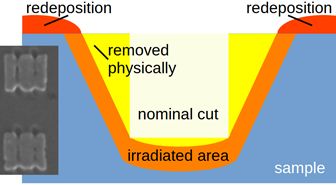
Technological advancements in nanolithography now enable precise manipulation of magnetic properties at the nanoscale. Their innovative method leverages a titanium buffer layer to enhance the focused ion beam (FIB) process. Our team from Department of Physics and Technology at nanoscale IEE SAS has unveiled new insights into the effect of ion beams on magnetic nanostructures….
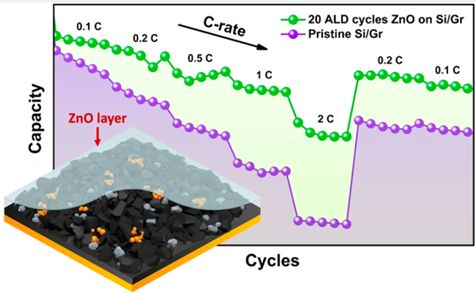
Silicon (Si) is a promising anode material for Li-ion batteries due to its high theoretical capacity (10 times higher than commonly used graphite) and abundant presence in the earth’s crust. However, the formation of an unstable solid-electrolyte interphase (SEI) and significant volume expansion during lithiation result in structural degradation, leading to a decrease in the…
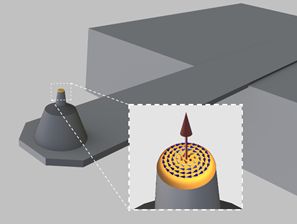
Magnetic Force Microscopy (MFM) is a technique that visualizes the distribution of a magnetic field of the sample with very high resolution. Our colleagues recently designed a new, more durable MFM tip with a magnetic vortex. In standard MFM, a sharp tip covered with a thin magnetic layer is used, which is placed at the…
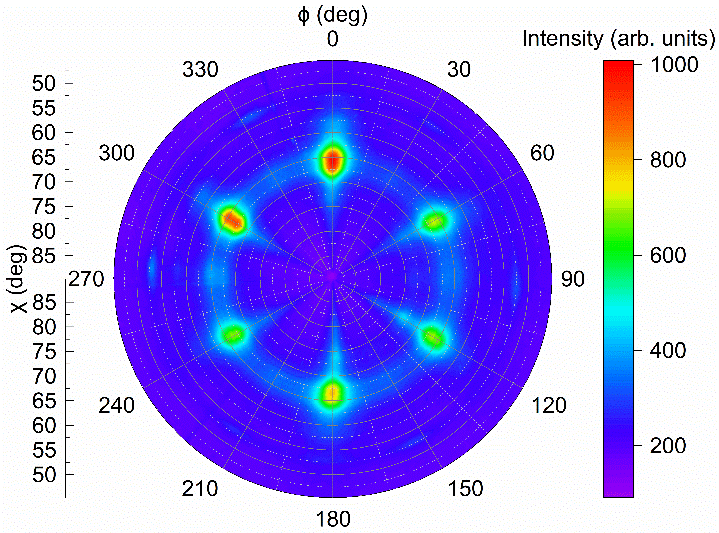
Molybdenum ditelluride (MoTe2) belongs to a large group of materials with a layered structure, also known as 2D materials. This means that their properties (e.g. electric) change significantly when the material is extremely thin, consisting of only a few atomic planes stacked on top of each other. This property distinguishes layered materials from bulk materials….
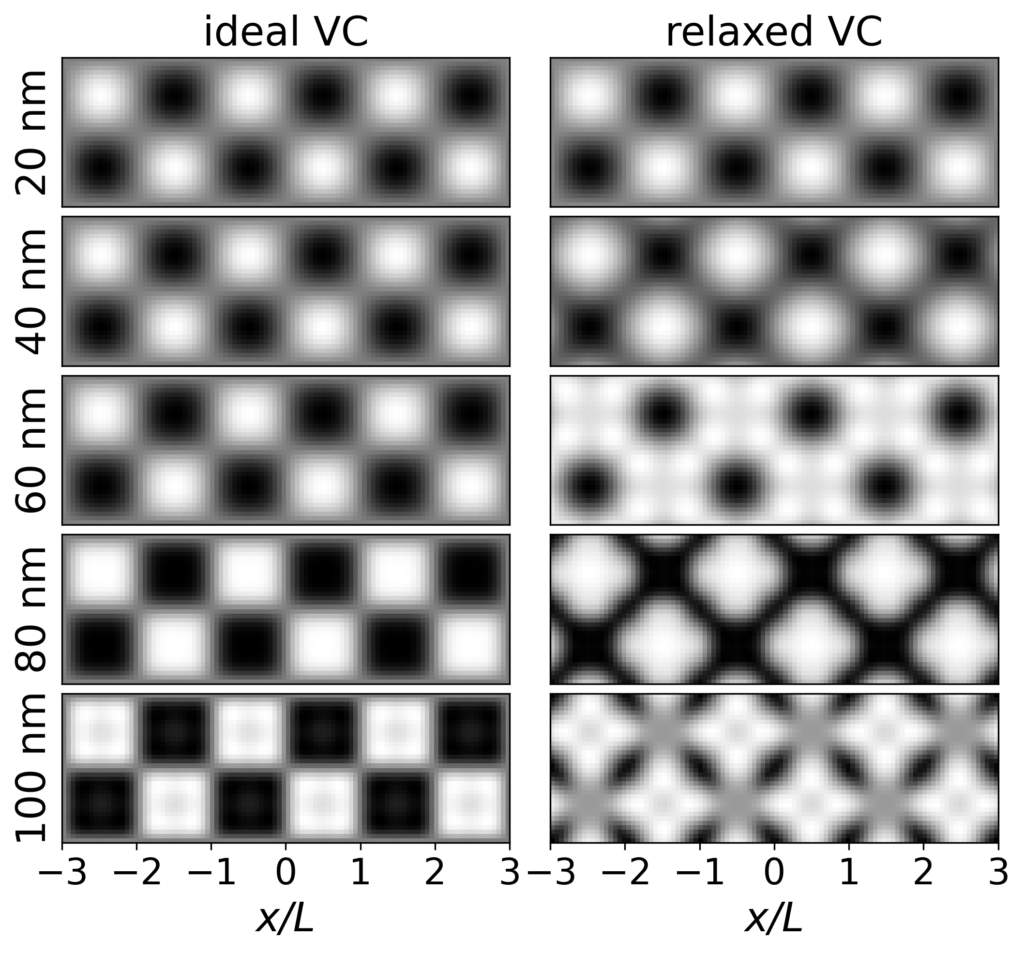
Magnetic force microscopy (MFM) has become established as a standard method to probe surface magnetic textures of a large variety of magnetic materials. Working principle of MFM is based on an oscillating cantilever ended by a sharp tip covered by magnetic material. During the scanning, this magnetic tip is passed closely above the sample surface…