





Article list

The 2023 IEEE 13th International Conference “Nanomaterials: Applications & Properties” was held on Sept. 10-15, 2023, in Bratislava, Slovakia. The Conference was organized through a partnership between the IEEE Nanotechnology Council, Institute of Electrical Engineering SAS, Slovak University of Technology in Bratislava, and Sumy State University, with endorsements and support from the IEEE Magnetics Society. More info: IEEE NAP-2023…
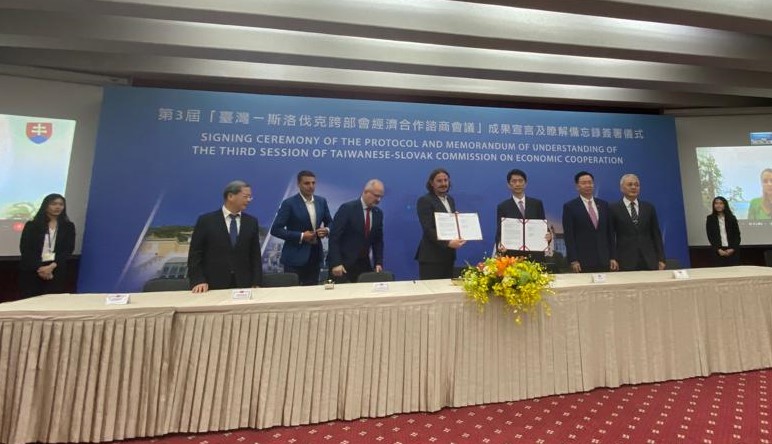
During the visit of the Slovak-Taiwanese Commission for Economic Cooperation, representatives of the Institute of Electrical Engineering Slovak Academy of Sciences (ElÚ SAV) signed a license agreement and a memorandum of understanding with the Industrial Technology Research Institute (ITRI), Taiwan. Under the license agreement, the IEE SAS will build-up a laboratory for reliability analysis of…
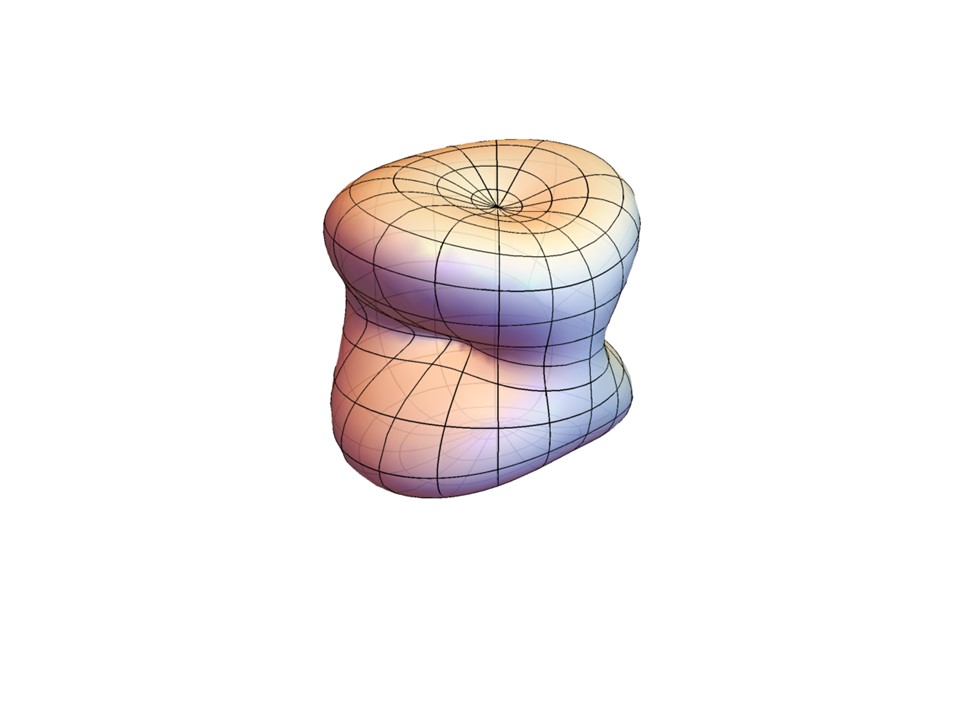
Spontaneous symmetry breaking is a physical phenomenon when some system decides to choose one of several options in an unpredictable way. For example, an egg placed on its tip will roll to the side. If it was placed on the tip precisely, it is not possible to predict in advance which side it will roll…
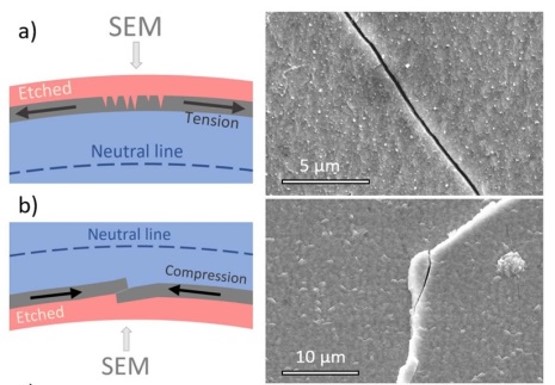
Composite conductors based on high-temperature REBCO (rare-earth cuprates) superconductors reach high transport current densities (1010 [A/m2]) at liquid nitrogen temperatures (‑193 ˚C), which makes them good candidates for high-field magnets (tens of Tesla). That makes them an interesting option for high-power cables, magnetic resonance, nuclear magnetic resonance, etc. In contrast to standard copper wires, which…
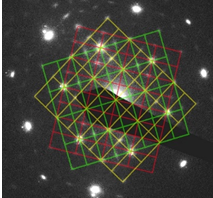
Crystalline gallium oxide (Ga2O3) represents a new type of semiconductor material suitable for the realization of high-voltage electronic devices capable of operating in the unprecedented kilovolt range. Our colleagues have recently published a paper detailing the material properties of Ga2O3 epitaxial layers prepared at the IEE SAS. Ga2O3 crystallizes in several crystalline structures (polymorphs). Among…
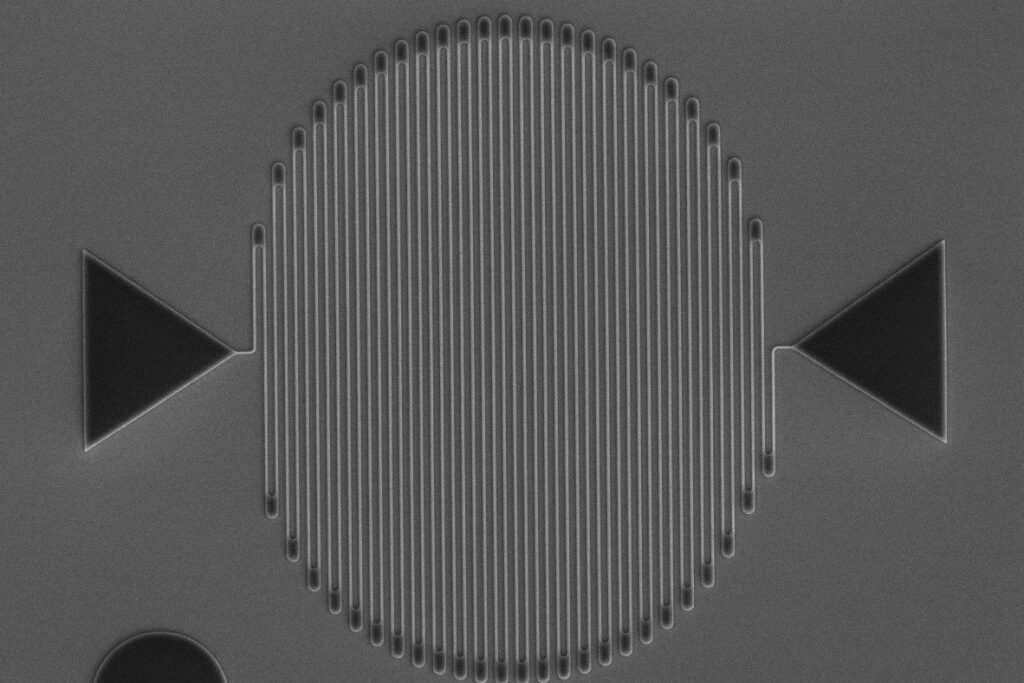
In January 2023, the European project Slovak Quantum Communication Infrastructure (skQCI) started, where Institute of Electrical Engineering SAS participates. Project’s main goal is to build a quantum communication infrastructure between cities Bratislava and Košice, connecting 12 Slovak academic institutions. The goal is to improve information and communication security at the level of state institutions, security…
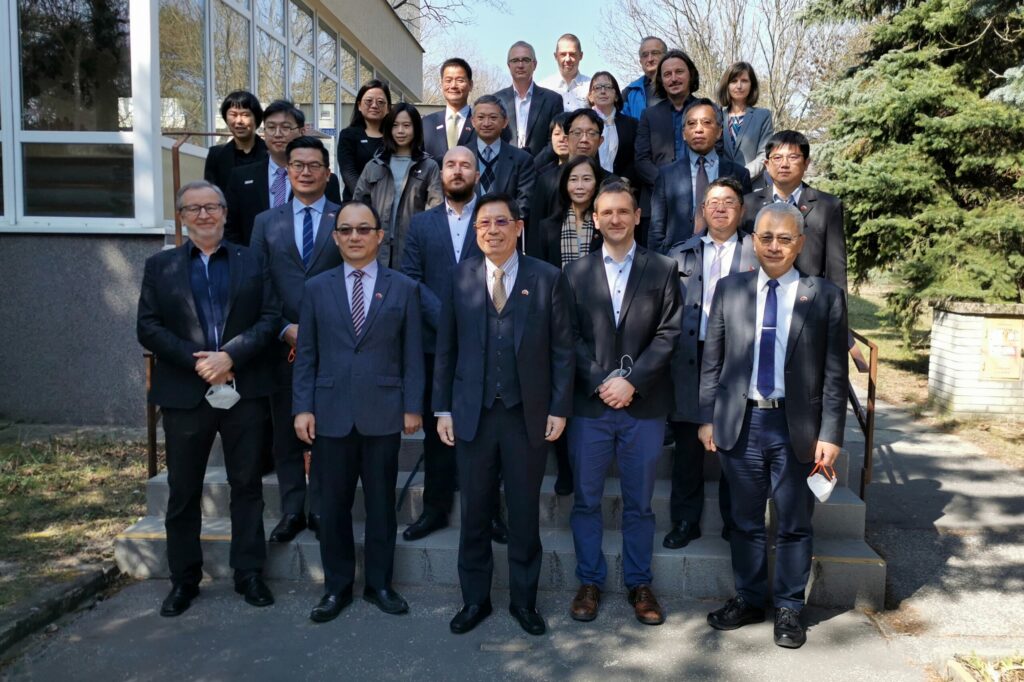
We have recently hosted a Taiwanese delegation of semiconductor industry experts from Industrial Technology Research Institute (ITRI), Taiwan. The delegation members included ITRI VPs Dr. Pei-Zen Chang & Dr. Chih-I Wu with their colleagues and Mr. David Nan-Yang Lee from Taipei Representative Office Bratislava. A fruiful discussion included our research topics and identified several points…
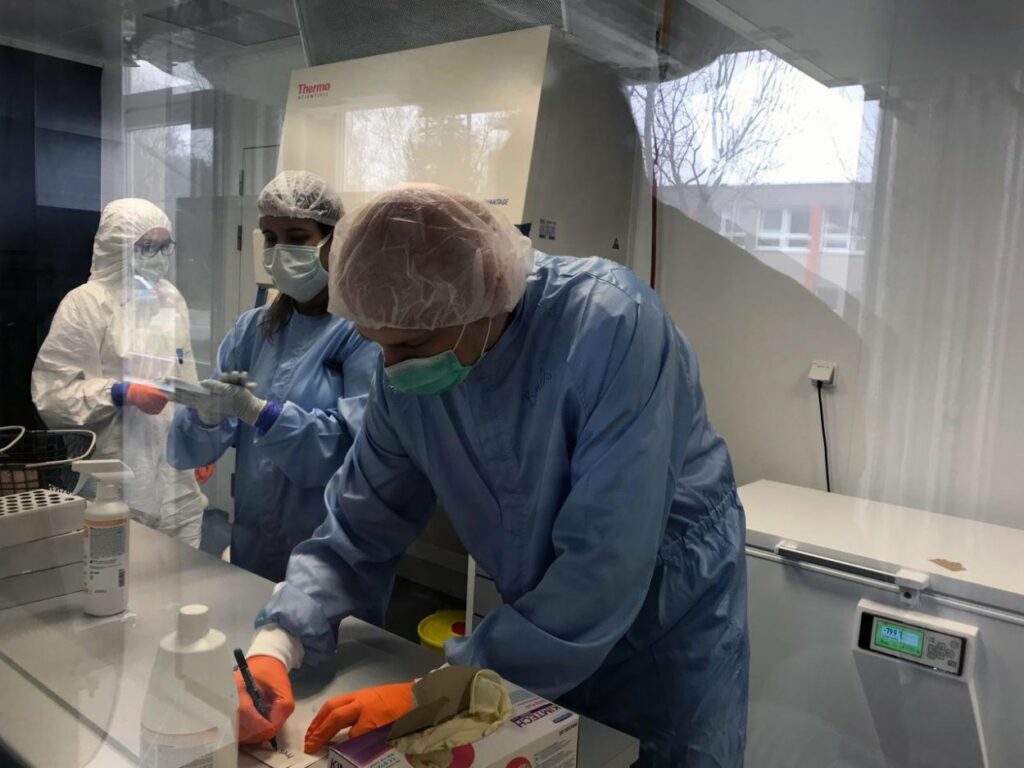
On April 15, 2020, the Crisis Assembly (CA) of IEE SAS met and agreed on the further instructions for the upcoming period: The heads of the scientific departments provide the signed documents ‘Home office work description’ for the month of March and April (from 10.3.2020) to the IEE management, describing activities related to work at…

On 30.3. In 2020, the Crisis Assembly (CA) of IEE SAS met and agreed on further instructions and rules for the upcoming period: The heads of the scientific departments will provide the Institute management with signed documents of the “home office” for the previous month (from 10.3.2020 inclusive), describing activities of workers during their work…
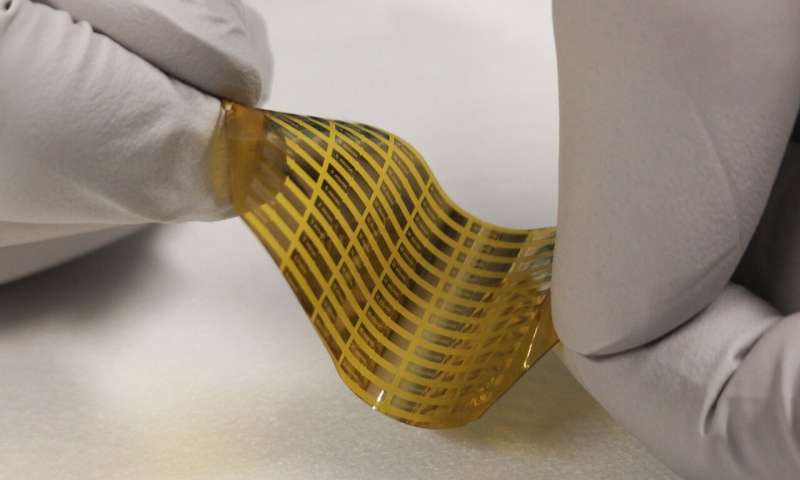
Terahertz (THz) waves fall between microwave and infrared radiation in the electromagnetic spectrum, oscillating at frequencies of between 100 billion and 30 trillion cycles per second. These waves are prized for their distinctive properties: they can penetrate paper, clothing, wood, and walls, as well as detect air pollution. THz sources could revolutionize security and medical…