





Article list
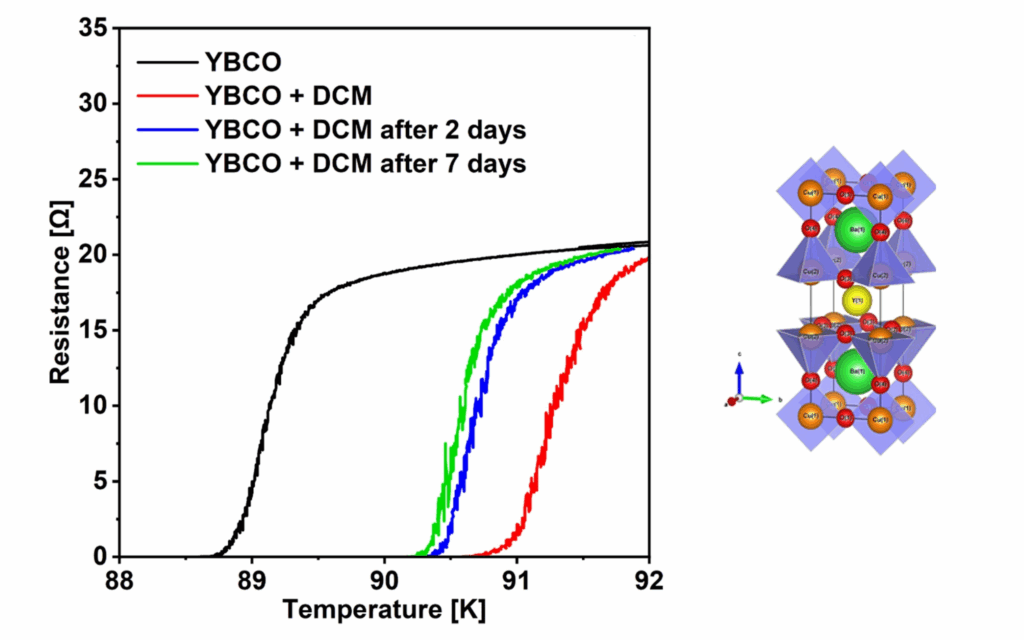
High-temperature superconductors represent a unique class of materials capable of conducting electric current without resistance at significantly higher temperatures compared to conventional superconductors – often even at the temperature of liquid nitrogen (77 K). These materials have a wide range of applications in modern technologies, from lossless power transmission to magnetic levitation and quantum computing….
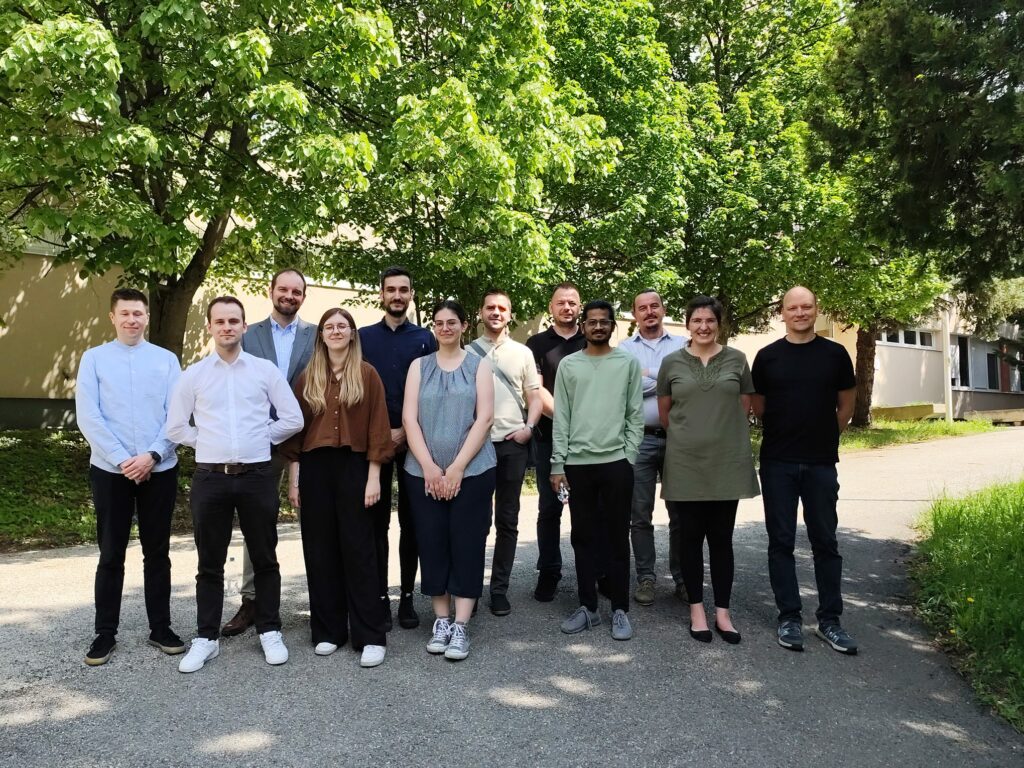
Colleagues from the gallium oxide group led by Dr Filip Gucmann in cooperation with the HUN-REN Centre for Energy Research and Łukasiewicz – Institute of Microelectronics and Photonics have organised two-day workshop on WBG/UWBG #semiconductor materials and devices in Budapest to disseminate the results achieved during the implementation of the CUBES project funded by the…
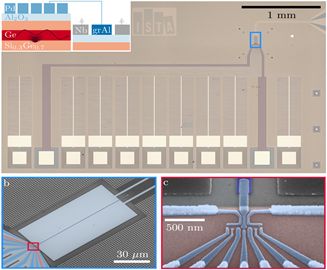
The development of quantum computers is currently facing a crucial technological challenge: how to scale existing systems from a few hundred quantum bits (qubits) to millions on a single chip. Spins of elementary charges confined in quantum dots are considered a promising candidate for scaling qubits, mainly due to their compact size but also for…
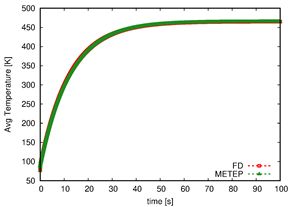
Scientists from the Institute of Electrical Engineering of the Slovak Academy of Sciences (IEE SAS) have introduced a new electro-thermal modeling method for superconductors, offering higher accuracy and efficiency compared to previously used approaches. This method, called METEP (Minimum Electro-Thermal Entropy Production), brings significant advantages over traditional methods. Unlike the traditional finite difference method, METEP…
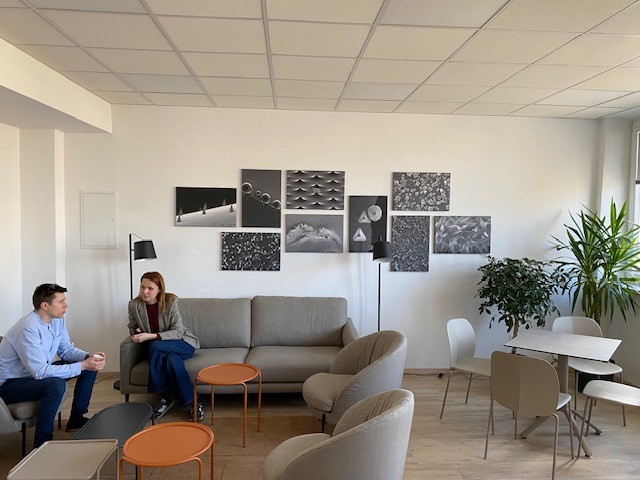
On February 18, 2025, we officially opened the Scientific Café at the Institute of Electrical Engineering SAS, v.v.i. This newly created social space, which also serves as a kitchenette, is designed to enhance the daily work environment and foster informal communication among colleagues. Why a Scientific Café? Great ideas often arise not only in laboratories…
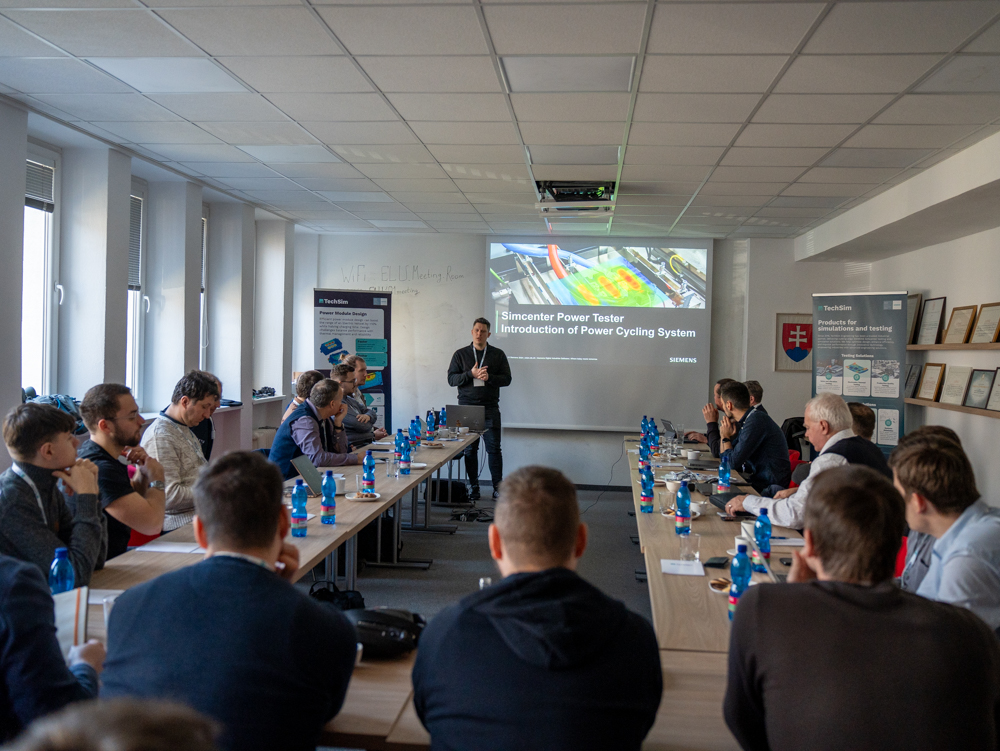
On February 19, 2025, the Institute of Electrical Engineering of the Slovak Academy of Sciences (IEE SAS) hosted the seminar “Innovations in Thermal Management for Modern Power Electronics,” co-organized with TechSim, the leading SIEMENS partner in CEE. The event aimed to present the latest technologies and approaches in thermal management for power modules and to…
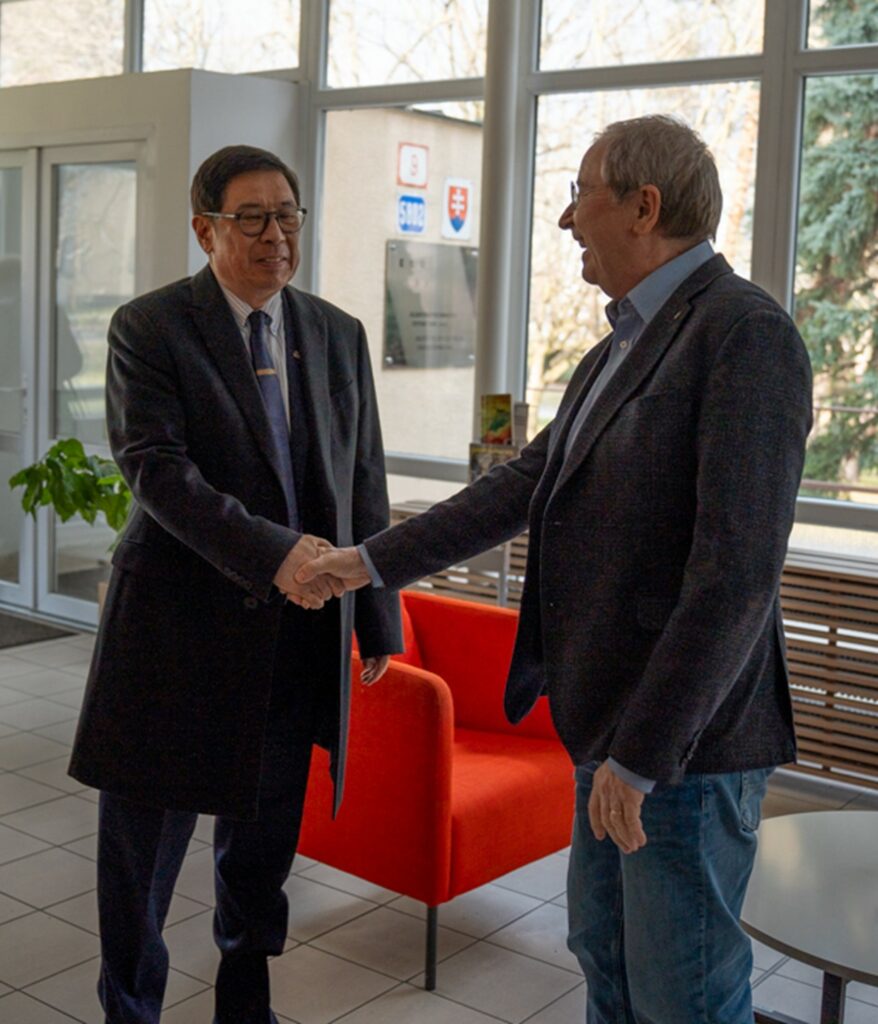
On February 17, 2025, the Institute of Electrical Engineering of the Slovak Academy of Sciences (IEE SAS) welcomed distinguished representatives from the Taipei Representative Office in Bratislava (TROB), led by Mr. Nan-Yang Lee. The visit aimed to exchange information and review the milestones of the ongoing bilateral SK-TW project, conducted in collaboration with Taiwan’s Industrial…
IEE SAS invite you to a lecture by Prof. Roman Martoňák (FMFI UK). Febr. 12, 2025, 10,00 a.m., in IEE SAS meeting room 101. Simulations of Structural Phase Transitions in Crystals Using Metadynamics Abstract: Structural phase transitions in crystals induced by pressure or temperature are complex phenomena of great importance. Besides fundamental interest e.g. in Earth…
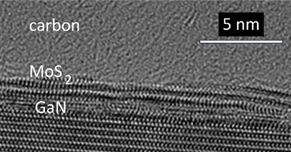
Two-dimensional (2D) molybdenum disulfide (MoS2) has attracted widespread attention due to its unique electronic, mechanical and optical properties. It is a material composed of several atomic layers of MoS2 held together by van der Waals forces. Our colleagues from the Department of Microelectronics and Sensors have prepared high-quality 2-5 monolayer thick MoS₂ layers on sapphire…
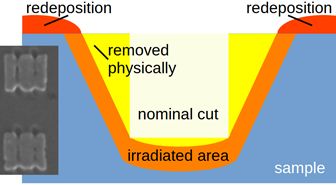
Technological advancements in nanolithography now enable precise manipulation of magnetic properties at the nanoscale. Their innovative method leverages a titanium buffer layer to enhance the focused ion beam (FIB) process. Our team from Department of Physics and Technology at nanoscale IEE SAS has unveiled new insights into the effect of ion beams on magnetic nanostructures….